Sunday, 1 November 2009

The Auteur Theory


Alfred Hitchock one of the greatest Auteurs of all time.
The Auteur Theory came about in the 1950’s it suggests that a film director’s films reflects their vision, just as an author of a book has a vision that is the same of a director. In this case the director conveys their message through camera angles and framing, such techniques reflect an emotion the audience is supposed to feel.
Structuralism in films emphasizes how films convey meaning through the use of codes and conventions.

Thursday, 29 October 2009

Planing for the film

Since Tuesday's lesson, I have completed our storyboards and Opal found the soundtrack that we will be using for the preliminary task, Most of this week I have been looking for a location suitable for our film. Since we have to ensure that the setting contributes effectively to the plot.
So when we come back after half-term we will be ready. Since the shot list,props & sets will be ready.

Thursday, 22 October 2009

Tuesday's Lesson

In Tuesdays lesson, our task was to storyboard each shot, my partner was absent so I had to do this by myself although I discussed with my teacher which types of lighting, and camera angles would be best. When Opal is back on Friday, we will be able to complete the storyboards and make any adjustments, In the meantime we will have to speak to a contact about a possible location perfect for the kind of artistic vibe we are going for. By Friday we should have come up with a definite location and a plan B location; one that we can fall back on.

Friday, 16 October 2009

Friday 16th October 2009

In today's lesson me and my work partner came up with a fixed plan for our preliminary production; we came up wth ideas and started stroryboarding. We then discussed with our teacher how to make our ideas to fit in with the prescribed task that was set for us. By the end we managed to adapt the brief and make it intrigueing at the same time. In order to conform to the genre. Since the main task is going to be a thriller I thought it would be good practice to experiment with the genre in my preliminary task in order to learn from it for my main task .We have kept the initial storyline the same but changed the location in order to fit in with the description. Over the weekend I am going to write up our story line and script in detail and think of possible locations and characters.

Thursday, 15 October 2009

Tuesday 13th October 2009

In last lesson, we started to think more in depth about ideas for our preliminary prescribed task. To help us think of better ideas and locations our teacher showed us examples of short films that made use of similar codes and conventions it gave us ideas to expand on this within our own individual storylines; since the lesson on Tuesday I have been thinking about which locations would be appropriate for our preliminary task. First of all I have thought about the genre and I've decided to follow the horror thriller genre. The concept of the narrative is one of a woman who is talking to her dead child whilst playing chess or a card game in the park. The arguement gets heated and ends with a shot of the space that the child was meant to be sitting in. The audience then realise that the child is in fact dead. It is still undecided whether there will be any make-up will be used to signify death or to let the audience come to their own conclusions, beacause if it isn't used the genre would become more psychological rather than thriller. In order to become clear about this, I am going to research more into the horror thriller sub-genre and think more about our narrative so that we know exactly what it consists of and can then begin planning concisely.

Monday, 12 October 2009

Research on Sir Alfred Hitchcock

Sir Alfred Hitchcock was a British filmaker and producer he was one of the first to create techniques in the suspense and psychological genres. The fifty feature films he directed consisted of the basic codes and conventions such as suspense, silence, fear, terror etc. such conventions have been developed over decades making the success and recognition of the thriller genre so evident in the present day. Hitchcock is one of the most popular and recognised film-makers.
He was popular for cruelly withholding information from his characters and the audience and most importantly engaging the emotions of the audience. Hitchcock's trademark has become gallows humour- a type of humour that arises from stressful, traumatic of life-threatening situations. He has become famous for his expert control of pace and suspense, his films are based heavily on the conventions of fear and fantasy.
About Hitchcock films:
The Lodger (1926) was an early silent film based on the serial killer Jack-the-Ripper, he made a cameo appearance which he made a habit of when it came to feature films. His next film was called Blackmail which was released in 1929. What makes Hitchcock the master of thriller and suspense is his ability (even in the early days of film and television)was to present a true
representation of reality


Cinematography in films is the art of adjusting sound and light and capturing it as a moving image.
When making our main task, I have researched the art of cinematography, which is essential for understanding the type of shots we use and why. Which ultimately is to instil suspense and wonder within the viewer.
In our main task it will be filmed from a subjective and objective point of view.
Objective - Is the audiences point of view
Subjective- Is What the character is seeing.


Below I have also included in my research Hitch-cock's filmography, I obtained this information from http://hitchcock.tv/mov/hfilm.html
The Silent Years
1925 The Pleasure Garden
1927 The Mountain Eagle
1927 The Lodger
1927 Downhill
1927 Easy Virtue
1927 The Ring
1928
Champagne
1928 The Farmer's Wife
1929 The Manxman

The British Classics
1929 Blackmail
1930 Juno and the Paycock
1930 Murder!
1931 The Skin Game
1932 Number Seventeen
1932 Rich and Strange
1934 The Man Who Knew
Too Much
1934 Waltzes From Vienna
1935 The 39 Steps
1936 Sabotage
1936 Secret Agent
1937 Young and Innocent
1938 The Lady Vanishes
1939 Jamaica Inn
1940 Foreign Correspondent
Vintage Hollywood
1940 Rebecca
1941 Mr. and Mrs. Smith
1941 Suspicion
1942 Saboteur


The War Years
1943 Shadow of a Doubt
1944 Lifeboat
1945 Spellbound

Perfecting the Art
1946 Notorious
1948 The Paradine Case
1948 Rope
1949 Under Capricorn
1950 Stage Fright

The Fourth Decade
1951 Strangers on a Train
1953 I Confess
1954 Dial "M" for Murder
1954 Rear Window

The Master of Suspense
1955
To Catch a Thief

1955
The Trouble with Harry

1956
The Man Who Knew
Too Much (remake)
1956
The Wrong Man

1958
Vertigo

1959
North by Northwest

1960
Psycho


The Grand Old Man
1963 The Birds
1964 Marnie
1966 Torn Curtain
1969 Topaz

Coming Home
1972 Frenzy
1976 Family Plot

Sunday, 11 October 2009

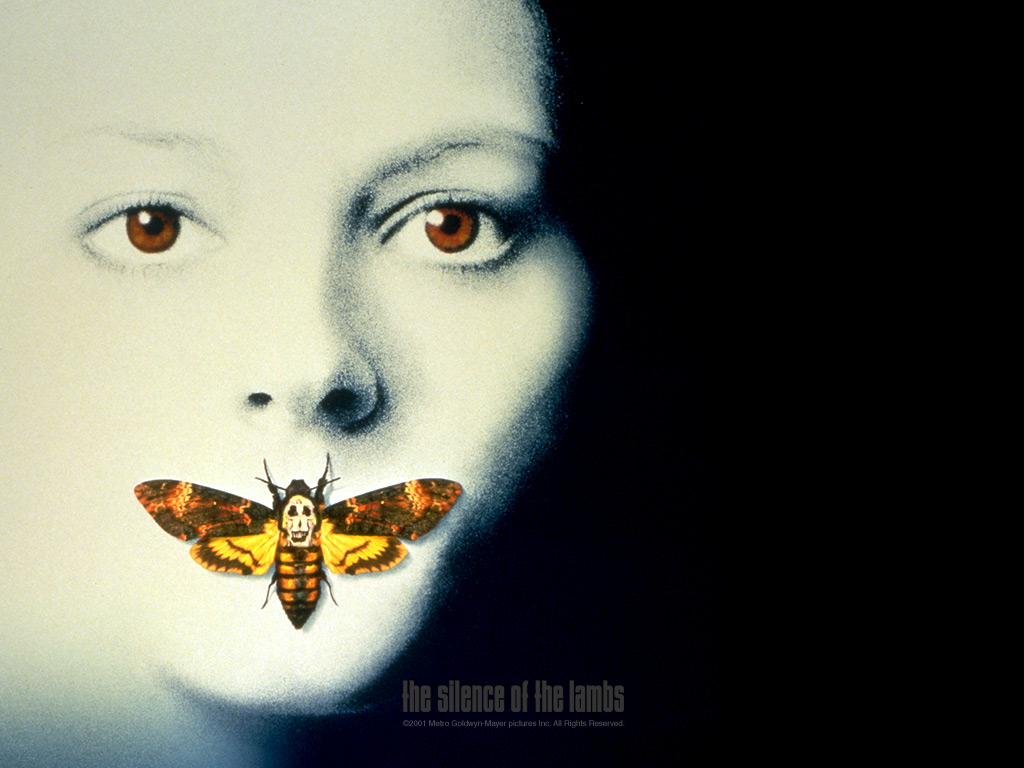
The Silence of the Lambs analysis


Mise en scene The mise en scene of the first scene is following the thriller conventions as it is in a forest, and the establishing shot shows trees without leaves suggesting the winter season, we can infer that the absence of life in the trees will be reflected onto the narrative and foreshadows death or disruption. The setting is very rural and looks like a deserted country side, no form of civilisation. This is even more daunting for the viewer because due to media such as newspapers the most extreme are seen to occur in a an area that is unknown, this puts thoughts and images into the mind of the viewer and the case might be that this setting is not going to reflect any of their thoughts. As the camera is following this character and changing camera shots we piece these images together and make inferences according to her appearance. She is dressed very casually, with tracksuit bottoms on and what is interesting is the her jumper; it has loads of sweat on it, which is very worrying as we are not familiar with this character yet and so wonder what is wrong. It is daunting as the amount of sweat on her jumper suggests that she has been running for a long time and that she is in some kind of danger.


Sound In this first scene there is non-diegetic sound, the music connotes a unsteady and complex setting, as there are many variations in the music; it goes from high pitched, to low pitched and then quite deep. Reflecting sadness, triumph and power. The subtle diegetic bird tweeting (or animal noise) emphasises the country side setting.
Once she stops running she exchanges a couple of lines with a detective character. Her tone of voice is quite controlled and calm suggesting that she is not in any danger at all and that this was just a false clue. (typical of thriller films)


Camera Angles The director uses a medium shot to introduce the female character; we see her facial expression that is one of determination and possibly fear we infer that she is trying to get away from someone or something. The tracking from behind makes us think that she is being chased. The motion within the camera whilst she is running does a great job in conveying her urgency. And as the camera movement gets stronger we start to feel that urgency and build a connection with this character and feel scared for us.
The director uses spatial relations so we can see her in one shot running and then in the next shot we see a medium shot of a building when we see her in the building we are supposed to assume that she has entered the without actually seeing her entering.